
Introduction: The Magic of Costa Rican Dolphins
Nothing quite compares to your first dolphin encounter.
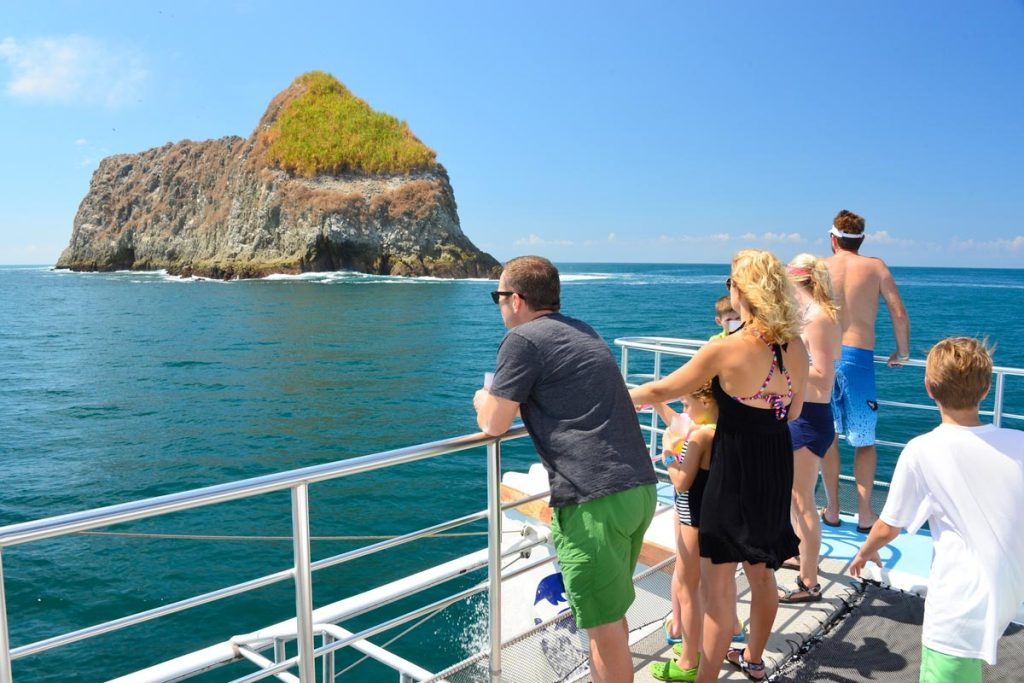
You’re on the catamaran, somewhere between shore and open ocean. The sun sparkles off the water. The crew suddenly points and shouts, “Dolphins!”
Within seconds, you see them. Moving fast. Jumping. Playing. Racing alongside the boat. Your kids’ faces light up. Adults gasp. Cameras appear everywhere.
One dolphin leaps completely out of the water, twisting in mid-air before splashing back down. Then another. Then three more at once. The whole pod seems to be showing off.
This moment—this exact moment—is why people remember Costa Rica forever.
After 20+ years of sailing Costa Rica’s Pacific coast with Planet Dolphin, we’ve had this moment thousands of times. We’ve learned everything about Costa Rican dolphins: why they’re here, which species you’ll encounter, how they behave, what their jumps and splashes mean, and how to make these encounters truly special for your family.
This guide explains it all—including the fascinating facts that make kids (and adults!) fall in love with these incredible ocean creatures.
Why Costa Rica Has So Many Dolphins
Costa Rica: Dolphin Paradise
Costa Rica sits on a major marine migration corridor where Atlantic and Pacific ecosystems converge. The Pacific coast has multiple upwelling zones—areas where deep, nutrient-rich ocean water rises to the surface.
What does this mean?
Upwelling brings nutrients that feed tiny creatures called plankton. Plankton feeds small fish. Small fish attract bigger fish. And dolphins follow the fish.
It’s like a massive underwater buffet that’s open year-round.
The result? Costa Rica has one of the most active dolphin populations in the world. Encounters aren’t rare—they’re common, especially in Manuel Antonio and Flamingo Bay.
Why Dolphins Love These Waters
Three reasons dolphins thrive here:
1. Abundant Food Everywhere
Sardine runs, herring schools, flying fish, mackerel—the buffet never closes. Well-fed dolphins are active, playful, energetic dolphins.
2. Protected Marine Areas
Much of Costa Rica’s Pacific coast is protected (national parks, marine reserves, no-fishing zones). Fewer dangers mean dolphins can relax, play, and raise their families safely.
3. Warm Water Year-Round
Water temperature stays comfortable (78-82°F) all year. Dolphins don’t need to migrate for warmth—they just stay and enjoy paradise.
Meet Costa Rica’s Two Dolphin Species
1. Spotted Dolphins (Stenella attenuata)
Also Called: Pantropical Spotted Dolphins
What They Look Like:
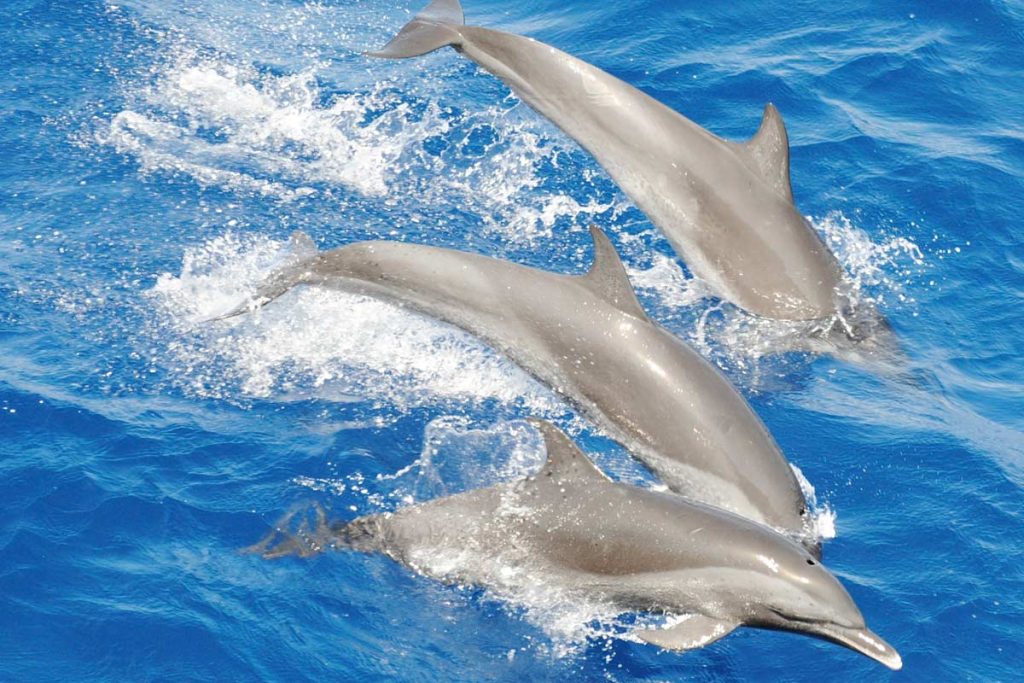
Imagine a sleek, gray torpedo covered in white spots (like someone flicked white paint at them). Adult spotted dolphins have dozens to hundreds of spots—the older they get, the more spots they develop. Baby spotted dolphins are born without spots and earn them as they mature, like earning badges.
Size: 5-7 feet long (about as long as a tall adult)
Weight: 200-250 pounds
Distinguishing Features:
- Gray body with white spots increasing with age
- Dark stripe along their back (like a racing stripe)
- White “lips” around their beak
- Sleek, streamlined body built for speed
Personality:
If dolphins were people, spotted dolphins would be the class clowns. They’re the showoffs of the ocean—playful, curious, and seemingly obsessed with boats.
Common Behaviors:
- Bow riding: Swimming in the wave created by the boat’s bow (like surfing!)
- Leaping: Jumping completely out of water (sometimes spinning!)
- “Rooster tailing”: Jumping and landing almost vertically, creating massive splashes
- Approaching boats: They seem genuinely curious about humans
- Playing chase: Racing each other, playing tag
Group Size: 20-100+ individuals (sometimes massive pods of 500+!)
How Often You See Them:
- Manuel Antonio: 80-90% of tours
- Flamingo: 70-80% of tours
- Year-round presence, most active December-April
Why Kids Love Them:
Spotted dolphins are like underwater acrobats. They jump, spin, splash, and seem to enjoy showing off. When they race alongside the catamaran, kids can look right into the water and see them zipping past like underwater rockets.
Fun Fact for Kids: Spotted dolphins can swim up to 22 mph—that’s faster than an Olympic swimmer! When they’re racing our catamaran, they’re barely trying. They could go way faster if they wanted to.
2. Bottlenose Dolphins (Tursiops truncatus)
What They Look Like:
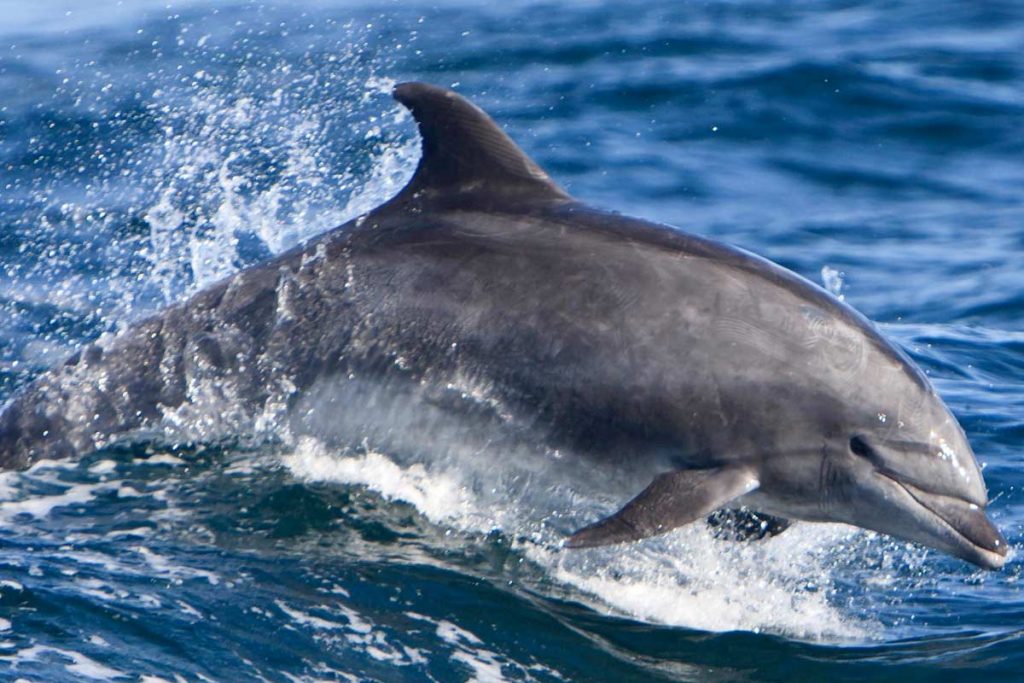
These are the “classic” dolphins you’ve seen in movies and TV shows. Solid gray color (no spots), distinctive rounded forehead, and that famous “smile” created by the shape of their mouth.
Size: 8-12 feet long (bigger than spotted dolphins)
Weight: 400-600 pounds (some males reach 1,400 pounds!)
Distinguishing Features:
- Uniform gray color (darker on top, lighter underneath)
- Large, bulbous forehead (called a “melon”)
- Pronounced beak (rostrum)
- Powerful, muscular body
- That famous “smile”
Personality:
If spotted dolphins are the class clowns, bottlenose dolphins are the wise, intelligent leaders. They’re curious but more reserved. When they interact with boats, it feels intentional—like they’ve made a conscious decision to say hello.
Common Behaviors:
- Strategic hunting: Working together to herd fish into tight groups
- Synchronized swimming: Moving in perfect coordination
- Tool use: Using marine sponges to protect their beaks while hunting (yes, really!)
- Teaching young: Mothers actively teaching babies how to hunt
- Deliberate approach: When they come to boats, it seems purposeful
Group Size: 10-30 individuals (smaller, tighter family groups)
How Often You See Them:
- Manuel Antonio: 60-70% of tours
- Flamingo: 50-60% of tours
- Year-round presence, slightly less common than spotted dolphins
Why Kids Love Them:
Bottlenose dolphins are the “smart” ones. Kids love watching them work together to catch fish—it’s like watching a team execute a perfect play. They’re also bigger and more powerful, making their jumps even more impressive.
Fun Fact for Kids: Bottlenose dolphins are one of the smartest animals on Earth—smarter than most primates! They can recognize themselves in mirrors (most animals can’t), use tools, solve complex problems, and even have unique “names” (signature whistles) that other dolphins use to call them.
Fascinating Dolphin Facts Kids (and Adults!) Love
Dolphins Are REALLY Smart
How Smart?
Scientists rank dolphins among the most intelligent animals on the planet—right up there with great apes, elephants, and some birds.
What They Can Do:
Recognize Themselves in Mirrors
Only a handful of animals can do this: great apes, elephants, magpies, and dolphins. When dolphins see themselves in mirrors, they understand that’s THEM—not another dolphin.
Learn Complex Tricks
Dolphins in research facilities have learned to understand sentences with grammar. They know the difference between “bring the ball to the hoop” and “bring the hoop to the ball.”
Use Tools
Some dolphin populations use marine sponges like gloves, protecting their beaks while hunting for fish buried in the sandy ocean floor.
Solve Problems
Researchers have watched dolphins figure out puzzles, create innovative hunting strategies, and even plan ahead for future events.
Create Unique Names
Each dolphin develops a unique whistle—essentially their “name.” Other dolphins use this whistle to call to specific individuals, like saying “Hey, Flipper!”
How Dolphins “See” with Sound
Echolocation: Dolphin Superpower
Dolphins don’t just see with their eyes—they “see” with sound using a superpower called echolocation.
How It Works:
- Dolphin makes clicking sounds from their forehead (up to 1,000 clicks per second!)
- Sound waves travel through water and bounce off objects (fish, boats, rocks)
- Echoes return to the dolphin
- Dolphin’s brain creates a 3D “sound picture” of their surroundings
What This Means:
Dolphins can “see” in complete darkness, through murky water, and even inside objects. They can tell the difference between different types of fish, detect buried creatures under sand, and know if another dolphin is pregnant—all with sound.
It’s like having X-ray vision combined with sonar.
Fun Demonstration: When you’re on the catamaran, listen carefully when dolphins are nearby. You might hear faint clicking sounds—that’s echolocation! They’re literally scanning the boat and everyone on it.
Mind-Blowing Fact: Dolphin echolocation is so precise they can detect a quarter-sized object from 100 feet away in murky water.
Dolphins Sleep with Half Their Brain
The Coolest Sleep Trick Ever
Here’s something wild: Dolphins can’t fully fall asleep like humans because they’d drown. They need to consciously breathe air at the surface.
Their Solution?
Dolphins sleep with half their brain at a time. One brain hemisphere sleeps while the other stays awake to control breathing and watch for danger.
What This Looks Like:
When dolphins sleep, one eye closes (the side with the sleeping brain half) while the other eye stays open. They slowly swim in circles near the surface. After a few hours, they switch—wake up the sleeping half, put the other half to sleep.
Why Kids Find This Amazing: Imagine being able to do homework with half your brain while the other half plays video games!
Baby Dolphins Are Born Tail-First
Dolphin Birth Facts
Pregnancy: 11-12 months
Birth: Tail-first (opposite of most mammals!)
Why Tail-First? Baby needs to start breathing immediately after birth. Coming out tail-first means their blowhole (breathing hole) emerges last, preventing accidental drowning during birth.
Baby Dolphins (Calves):
- Stay with mom for 3-6 years
- Nurse (drink milk) for 18 months to 2 years
- Learn everything from mom: hunting, playing, social skills
- Protected by entire pod (it takes a village!)
When You See Babies on Tours:
Sometimes you’ll spot tiny dolphins swimming super close to their mothers. These are babies! The mother’s swimming creates a special water flow (slipstream) that helps the baby swim with less effort—like getting towed along.
Important: Never try to touch or get too close to baby dolphins. Protective mothers can become aggressive if they think their baby is threatened.
Dolphins Can Jump 20 Feet High
Why Do Dolphins Jump?
When you see dolphins leaping out of the water, kids always ask: “Why do they do that?”
The Reasons:
1. Looking Around (Spyhopping)
Jumping gives dolphins a view above water. They can spot birds (which indicate fish), check for danger, or see what that big white thing (your catamaran) is doing.
2. Communication
Big splashes make noise underwater that travels far. A huge jumping splash might mean “Hey everyone, I found fish over here!”
3. Removing Parasites
Crashing back into water hard can knock off annoying parasites (tiny creatures that attach to their skin). It’s like scratching an itch.
4. Playing and Having Fun
Sometimes dolphins jump just because it’s fun. Scientists have observed dolphins doing synchronized jumps together—it looks like they’re showing off or playing.
5. Traveling Efficiently
Believe it or not, jumping and swimming through air is sometimes faster and less energy than swimming underwater. It’s like taking a shortcut.
Most Spectacular Jump: The “rooster tail”—when dolphins jump almost vertically and crash back down tail-first, creating enormous splashes. Spotted dolphins do this often, and it looks completely intentional.
Dolphins Can Hold Their Breath for 10+ Minutes
Dolphin Lung Facts
How Long: 8-10 minutes typically (up to 15 minutes for some species)
How They Do It:
- Dolphins exchange 80% of their lung air with each breath (humans only exchange 15%)
- They store extra oxygen in their blood and muscles
- Their heart rate slows when diving (conserves oxygen)
- They can collapse their lungs to prevent nitrogen absorption (avoids “the bends”)
What You See:
When dolphins surface near the catamaran, you’ll hear a distinctive “psshhhhh” sound—that’s them exhaling forcefully through their blowhole before inhaling. The mist you see is a mix of air, mucus, and sometimes water droplets.
Fun Comparison: Kids can usually hold their breath for 30-60 seconds. Dolphins can hold theirs 10-15x longer!
Dolphins Have Unique Whistles (Their “Names”)
Dolphin Language
Dolphins don’t just click for echolocation—they also whistle, squeak, and make various sounds for communication.
Signature Whistles:
Each dolphin develops a unique whistle pattern by their first birthday—essentially their personal name. Other dolphins learn these signature whistles and use them to call specific individuals.
Examples:
- Mother dolphins whistle their signature sound repeatedly when their baby is born, teaching the baby to recognize mom’s “name”
- Dolphins use other dolphins’ signature whistles when looking for them: “Hey, has anyone seen Blue Wave?” (their unique whistle)
- Best friends exchange signature whistles frequently (like texting your BFF)
Proof This Works:
Scientists recorded wild dolphins’ signature whistles, then played them back from underwater speakers months later. The dolphins whose “names” were called responded and came to investigate!
Mind-Blowing Fact: Some dolphin populations have regional “dialects”—different groups use slightly different whistle patterns, like different human accents.
When & Where to See Dolphins in Costa Rica
Best Seasons for Dolphin Encounters
Dry Season (December – April) — ⭐⭐⭐⭐⭐
Why It’s Best:
- Peak dolphin activity
- Calm seas (easier spotting)
- Excellent water clarity
- Most active dolphin behavior
- Bonus: Humpback whales also present!
Probability: 80-90% chance in Manuel Antonio, 70-80% in Flamingo
Best Months: January and February (peak everything)
Shoulder Season (May, November) — ⭐⭐⭐⭐
Why It’s Good:
- Dolphins still very active
- Fewer tour boats (more intimate encounters)
- Better pricing
- Good weather most days
Probability: 70-80% chance in Manuel Antonio, 65-75% in Flamingo
Green Season (June – October) — ⭐⭐⭐
Why It’s Still Worth It:
- Dolphins present year-round
- Rougher seas make spotting harder
- Afternoon rain affects visibility
- Much fewer tourists mean peaceful encounters
Probability: 60-70% chance in both locations
Important: Even in green season, morning tours have calm conditions perfect for dolphin spotting.
Best Locations
Manuel Antonio Area — ⭐⭐⭐⭐⭐
Why It’s Best:
- Highest dolphin encounter rate in Costa Rica
- National park coastline attracts feeding dolphins
- Multiple resident pods
- Deep water close to shore (dolphins like this)
- Protected marine areas
What You’ll See:
- Spotted dolphins (very common)
- Bottlenose dolphins (common)
- Mixed species pods (sometimes both together!)
- Seasonal humpback whales as bonus
Typical Encounter: 1-3 separate dolphin sightings per 3.5-hour tour
Flamingo Area — ⭐⭐⭐⭐
Why It’s Great:
- Excellent dolphin encounters
- Less boat traffic (more peaceful)
- Pristine coastline
- Catalinas Islands attract marine life
What You’ll See:
- Spotted dolphins (common)
- Bottlenose dolphins (regular)
- Often more relaxed encounters (fewer boats means less stress on dolphins)
Typical Encounter: 1-2 dolphin sightings per 3.5-hour tour
Related Posts

Wildlife of Costa Rica
The Wildlife of Costa Rica comprises all naturally occurring animals, fungi and plants that reside in this…